Pattern Guides
Cottagecore Wardrobe: What to Sew First (Patterns Inside)
Cottagecore is more than a TikTok aesthetic — it’s a whole way of dressing: soft silhouettes, natural fabrics, pockets you can actually use, and clothes that look like they came out of a countryside linen press. If you’re planning a cottagecore wardrobe and you sew, you’re ahead of the game: you get to choose the fabric, the fit, and the story of every piece.
The question that stops most people is “what do I sew first?” Because building a cottagecore wardrobe isn’t about making ten pieces at once — it’s about picking a foundation dress that works in three seasons, then layering from there. This guide walks you through that decision, dress by dress, so your first project is one you’ll actually wear every week.

What Makes a Dress “Cottagecore”? (And Why It Sews Easier Than You Think)
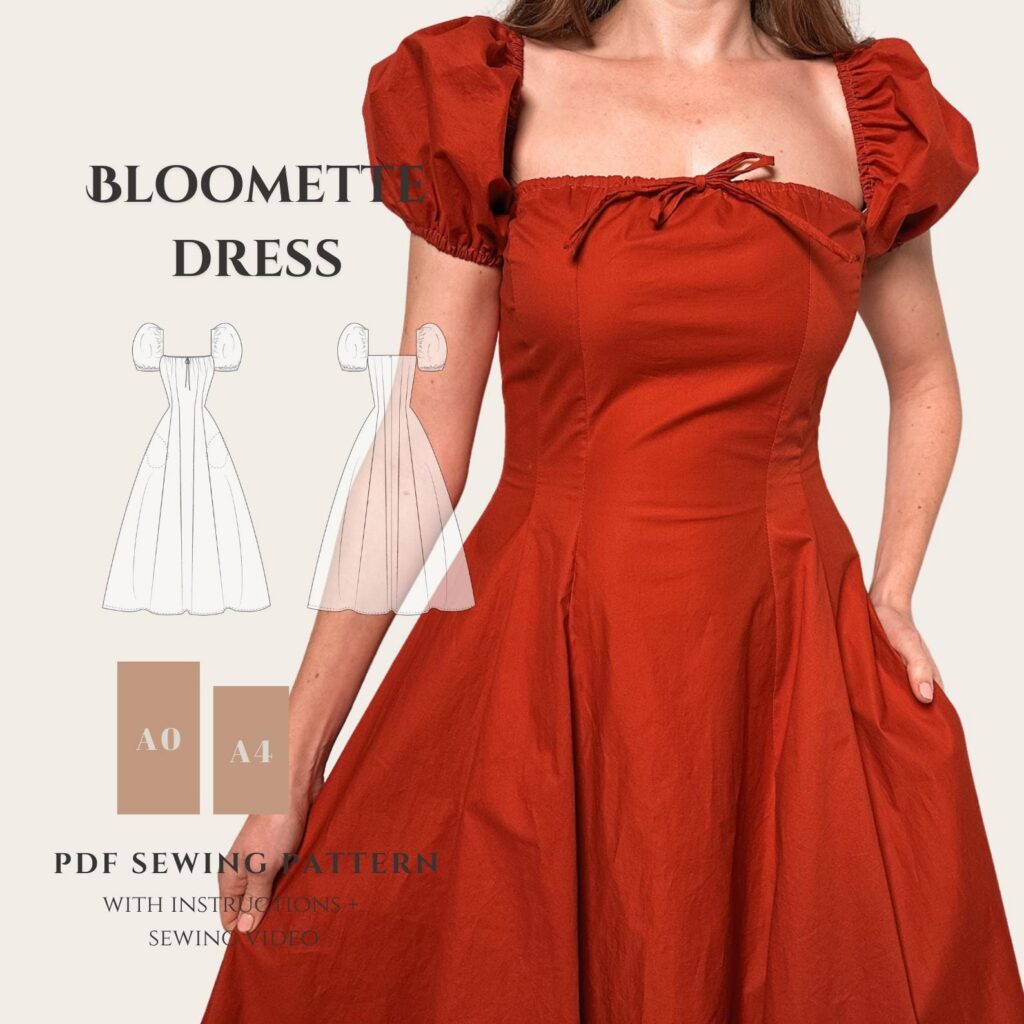
The visual signatures of cottagecore dressing are simple to reproduce in a sewing pattern: a defined waist, gentle or romantic sleeve volume, a modest neckline, and a skirt with enough body to move. Little ruffles, inseam pockets, and princess seams add that handmade, heirloom quality the aesthetic is known for.
Here’s the good news: none of these details are technically hard. In fact, cottagecore dresses are some of the most beginner-friendly garments you can make. Flowy skirts forgive wonky seam allowances. Elastic waists hide fitting wobbles. And the whole style avoids the trickiest elements in sewing — zippers, boning, and precision tailoring. If you can sew a straight seam, you can sew a cottagecore dress.
Sew This First: The Cottagecore Dress That Anchors Your Wardrobe
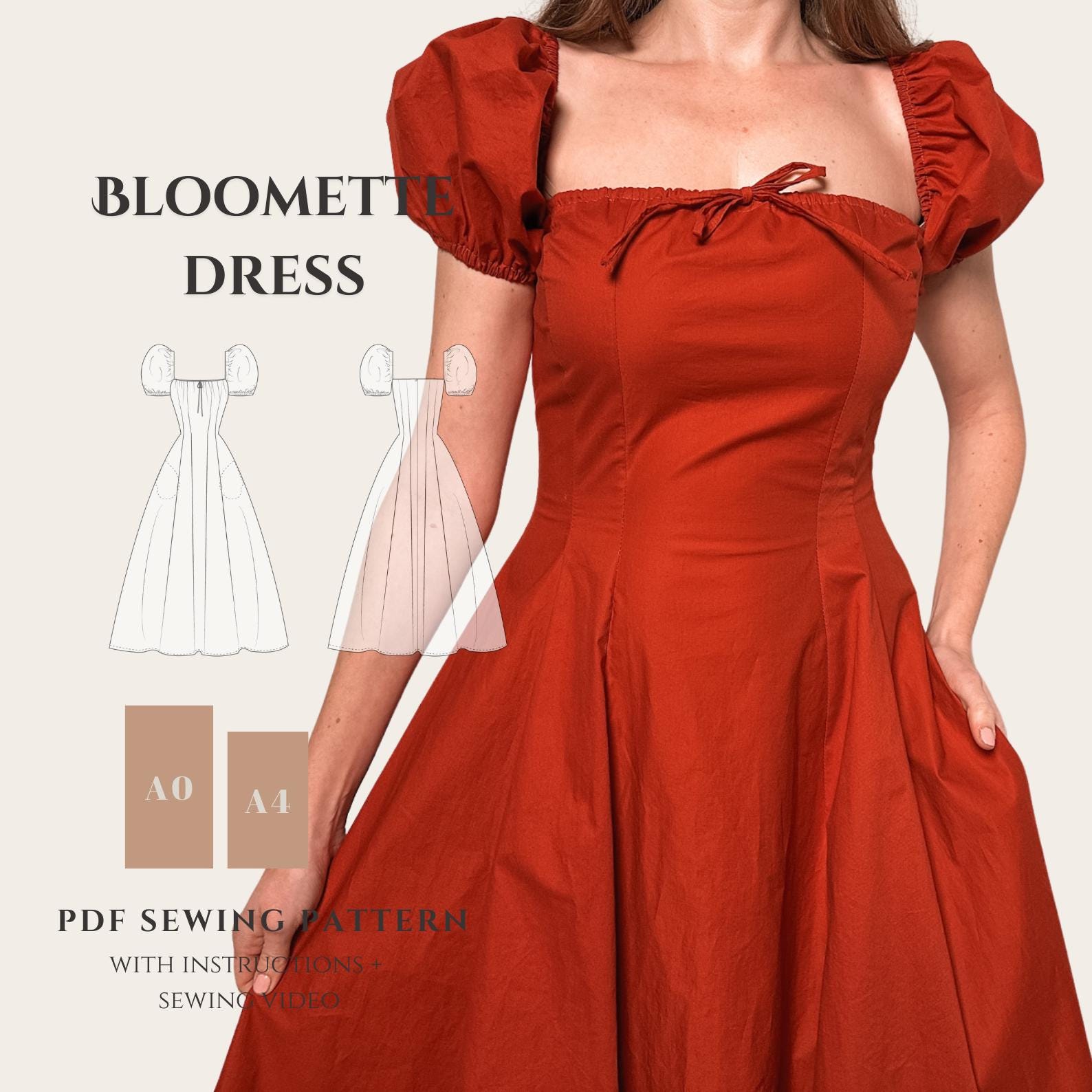
Start with the dress you’ll reach for most: a fitted-bodice midi with princess seams and inseam pockets. Our Cottagecore Dress Sewing Pattern is exactly that — beginner friendly, sized US 0–18, and it comes with a full video tutorial, so you’re never staring at a diagram wondering what “step 7” means.
Why it’s the right first piece:
- Princess seams give you real fit without darts or fitting gymnastics — the bodice curves to your shape while staying easy to sew.
- Inseam pockets are non-negotiable in cottagecore style (where else would the foraged blackberries go?), and they’re sewn flat — a genuinely beginner-safe technique.
- A midi skirt in cotton or linen works with ankle boots in autumn, sandals in summer, and a petticoat in spring. One dress, three seasons.
Fabric note: a good cotton poplin or a midweight linen makes this dress sing. Stiff quilting cotton will look boxy; drapey viscose will fight the princess seams. If this is your first fitted bodice, pick a stable cotton — you’ll thank yourself at the ironing board.
Second Make: The Twisted-Back Dress for Warmer Days
Once your anchor dress is done, add something breezier. The Libra Dress Sewing Pattern is the cottagecore-meets-summer piece: a twisted back detail that looks far harder than it is, French seams throughout (so your insides are as pretty as your outsides — very much in the spirit of the aesthetic), and no serger needed. Sized US 0–18, instant download.
If you’ve never tried French seams, this pattern is the friendliest possible introduction: you sew the seam wrong-sides-together, trim, then sew it right-sides-together. Two straight lines and all your raw edges disappear. Once you’ve done it a few times, you’ll wonder why every pattern doesn’t use them.
Third Make: The Romantic Statement Dress
For the dress that gets worn to markets, picnics, and every “oh, you made that?” moment: the Drop Waist Dress Sewing Pattern. Puffy balloon sleeves, a heart neckline, and a drop waist — it’s the most theatrical silhouette in the shop and still rated beginner friendly, because the drama comes from easy gathers rather than tricky construction.
Style it plain in a solid color and it’s understated; make it in a tiny floral and it’s fully storybook. Both readings are correct.
The Free Starter: A Sundress for a Test Run
If you’d rather dip a toe in before cutting into lovely linen, grab our free sundress pattern — a genuine full pattern, not a teaser. It’s the perfect low-stakes first make: one afternoon, minimal fabric, and you’ll have a wearable summer dress by dinner. Many sewists use it to test a pattern brand before buying — sensible! You’ll find it and every other free pattern here.
Building Out the Rest of the Wardrobe (a 4-Dress Plan)
- Dress 1 — the anchor: Cottagecore Dress with princess seams and pockets. Worn weekly, all seasons.
- Dress 2 — the summer piece: Libra Dress, in a light linen or cotton voile.
- Dress 3 — the statement: Drop Waist Dress with balloon sleeves, for outings and occasions.
- Dress 4 — the free test-drive: Sundress, in whatever cheerful fabric you couldn’t leave at the shop.
Four dresses is genuinely enough for a capsule cottagecore wardrobe — they layer over blouses, under cardigans, and mix with whatever you already own. Add accessories (a headscarf, a basket bag) and you’re done. Slow fashion doesn’t need to be fast production.

New to Sewing Garments?
If this would be your very first garment project, read our guide to easy beginner sewing patterns you can finish in a weekend first — it covers which project types are realistic for a first attempt. And before you cut anything, make sure you know how to print and assemble a PDF sewing pattern properly; a well-assembled pattern sheet makes every step that follows easier.
Build Your Cottagecore Wardrobe →
Every pattern mentioned here is an instant PDF download, sized US 0–18, with beginner-friendly instructions — and the Cottagecore Dress includes a full video tutorial. Start with the Cottagecore Dress pattern →